- Eiko's Newsletter
- Posts
- WTF: Alien Enemies Act, Art Therapy, Maples, Seeds, Pain, Trees
WTF: Alien Enemies Act, Art Therapy, Maples, Seeds, Pain, Trees

Eiko Mizushima
March 18, 2025
Song of the Week
Listen to this song as you read to help open you up. The Good by Cynthia Erivo. Thanks again to Maya for lifting this song up. ❤️
Updates
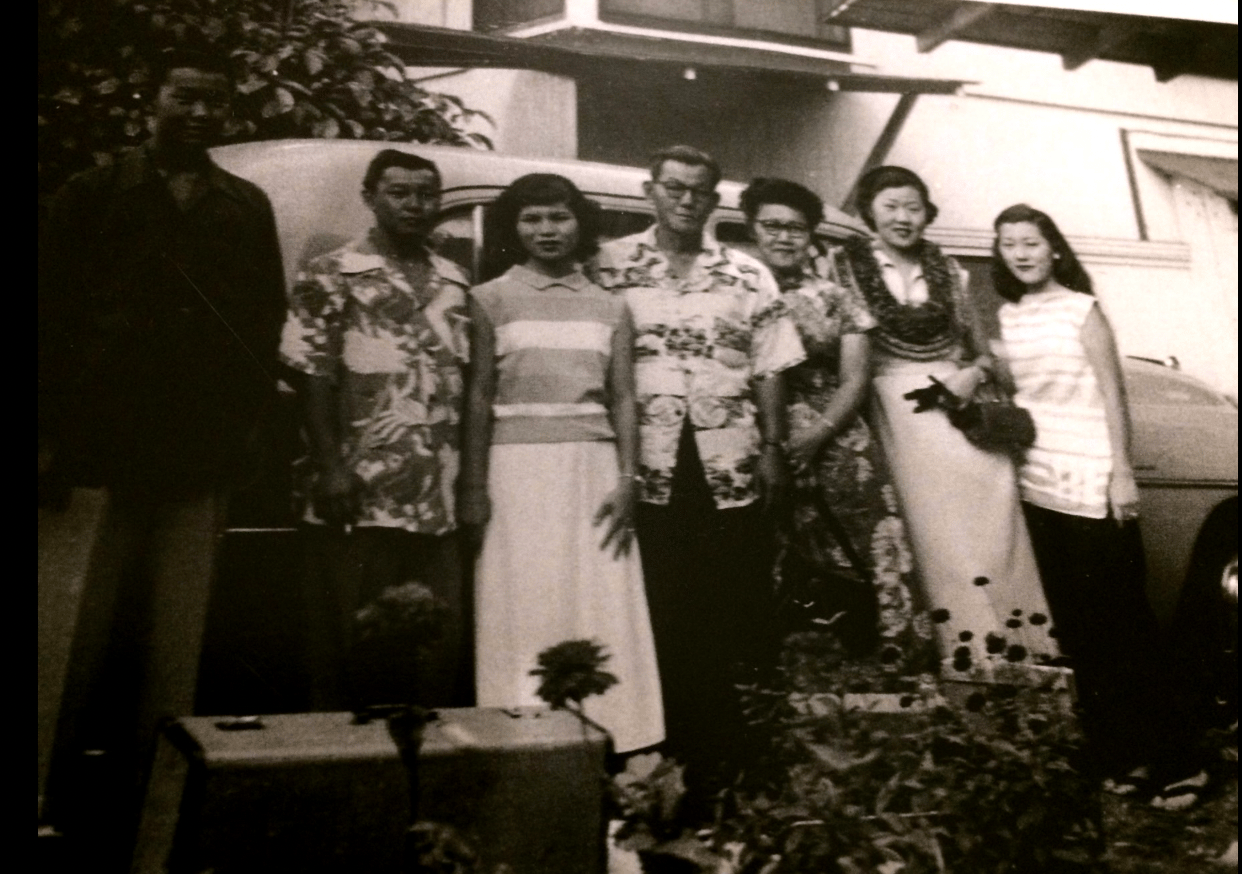
My nuclear family in Honolulu who were on house arrest. My grandma is the second from the right with all the leis. She was ten years old at the time the Alien Enemies Act was invoked in 1941. She is in her twenties here.
I’ve been thinking a lot about the Alien Enemies Act that was invoked this weekend under the same ruse used in 1941. This law was last used in 1941 to justify the arrest and internment of 30,000 Japanese, German and Italian nationals during World War II. Can you see how we are all connected? So many misconceptions continue about how and why this act was used. There is so much historical amnesia in the U.S. because if we remembered the violence would have to stop. I want to be clear that this act was used to increase fear, to justify escalation of violence and catalyze war. I’m going to keep saying this— fear is a great way to control people. The opposite of that— feeling secure and generating safety, is how we keep our heads on our shoulders, remember our deep mycelial connections to each other, and be the best humans we can be. I certainly feel afraid and angry every day these days, and I am increasing my self and community care practices to keep up. I am pairing these practices with active resistance and liberatory practices because it’s impossible to do one well without the other. I’m sending you all a big warm and longer than average *hug* right now because I know how many people are crying, feeling rage, and/or numbing out right now. Take a moment to feel your body and know I am reaching out to feel with you too. Breathe. Move. Listen to the seasons changing. Check in with yourself.
A little bit about my family and the Japanese internment. Interning all Japanese people in Hawaii turned out to be too expensive because there were so many Japanese people there. At first, they did indeed tear some people away from their families and community in Hawaii and intern them on the Mainland. However because that was so expensive, the U.S. government changed tactics and instead put all the islands on lockdown. My grandma, her parents, sister, and two brothers were placed essentially on house arrest in Honolulu. They lived right off of Waikiki, on McCully St., which looked so different than it does now. The FBI routinely and without consent raided their house to intimidate them. In an attempt to keep themselves safer, my family burned all their Japanese items—kimonos, obis, books, all of our Japanese things except some love letters my great grandma kept from her first love. The FBI stole our family’s samurai sword. I’m sure it’s in a museum somewhere now, or in the agent’s descendant’s dusty attic.
The other day I saw a little latinx toddler walking around in a vanilla knit sweater with a U.S. flag across the chest. I remembered the many ways families try to protect their little ones. I remember why so few 2nd, 3rd, 4th, and 5th generation Japanese Americans speak Japanese. Again, I invite us to feel the connections, the solidarity that can help us remember that all our struggles are so similar. At one time it was your people, my people, they take turns attacking us so we don’t all stand up together at once. It’s a good time to remember that every one of us have something sacred and personal at stake when we study our history. Breathe.
Art Therapy
I offer art as therapy in my practice, and wanted to provide more information on how important art is for healing. Art therapy is the primary modality I offered when I worked in the DTP. Check out the effectiveness of art therapy in this article. Collie, Backos, Malchiodi, and Spiegel (2006) describe art therapy in PTSD treatment as helpful in decreasing re-experience, arousal, and less visible symptoms as avoidance and emotional numbing. Meijsters (2008) states that therapeutic art interventions provide the possibility to distance oneself from emotion and provide cognitive integration of emotion and stimulate meaning-making processes.
Join a Pain Study
If you are BIPOC and would like to be a part of a research study on pain and experience back or neck pain yourself, you could join this study by the UMN. The interventions they will be using include using educational videos, exercises, setting goals, talking with others, and self-reflection.
Schedule With Me :)
OTR/L, BA, MHP, LMT,
she/they) Integrative Therapies
I offer trauma informed and somatic informed therapeutic coaching with a focus on trauma healing, healing through art, spirit, mindfulness, play, and connecting to nature. I also offer craniosacral therapy, Swedish massage, Thai bodywork, and myofascial release for the massage and bodywork side of things. I’m taking on new folks, spread the word.
Community Events
Maple Syrup Workshop at Bdote:
Learn how to tap trees with Kao, DNR Naturalist at Bdote (Southwest). Friday, March 21, $19. Register here.
Spring Garden Seed Starting Class:
This is also through Minneapolis Community Adult Education classes. Register here, it’s $41 and includes a seed starting kit. It’s that time of year to start your seeds! If you’re like me you start them, then realize which seeds need to be tossed because you’ve been hoarding them for years and then need to start over again. Start now if you can.
Spring Tree Identification:
This class is a part of the ACCESS Program for adults with developmental disabilities with Minneapolis Adult Community Education. Spring is one of the trickiest times to identify trees. Learn to identify trees before the leaves fully emerge using clues such as buds, flowers, bark, and phenology, then go on a walk with a naturalist and practice your identification skills. Register here.