- Eiko's Newsletter
- Posts
- Discernment as Medicine: Mashkiki and Enokitake
Discernment as Medicine: Mashkiki and Enokitake

Eiko Mizushima
September 19, 2025
Song of the Week
Listen to this song as you read to help open you up. Mohomoneh by Pura Fé.
Updates!
Mashkiki is the ojibwe word for medicine, Maji-mashkiki is the word for poison which means “bad medicine”. It’s a fine line which separates a medicine from a poison, it has a lot to do with quantity, thresholds, and using our discernment to tell the difference between two things that look very alike or perhaps are the same thing, but need to be taken in different amounts or at a different time. This reminds me of the term hormesis which is where a low dose of a substance or activity stimulates a positive response and higher dose stimulates a negative or inhibitory response for health. For example applying short bursts of stressors like going in a cold plunge or a hot sauna, sprinting to release some energy when you’re stressed, or eating a small amount of juniper berries, munching on wood sorrel, all can be helpful in smaller doses, detrimental if overdone. There are thousands of examples of this found in biological systems and indigenous wisdom around the world. What are you trying to keep in balance this week? When does your mashkiki become maji-mashkiki?
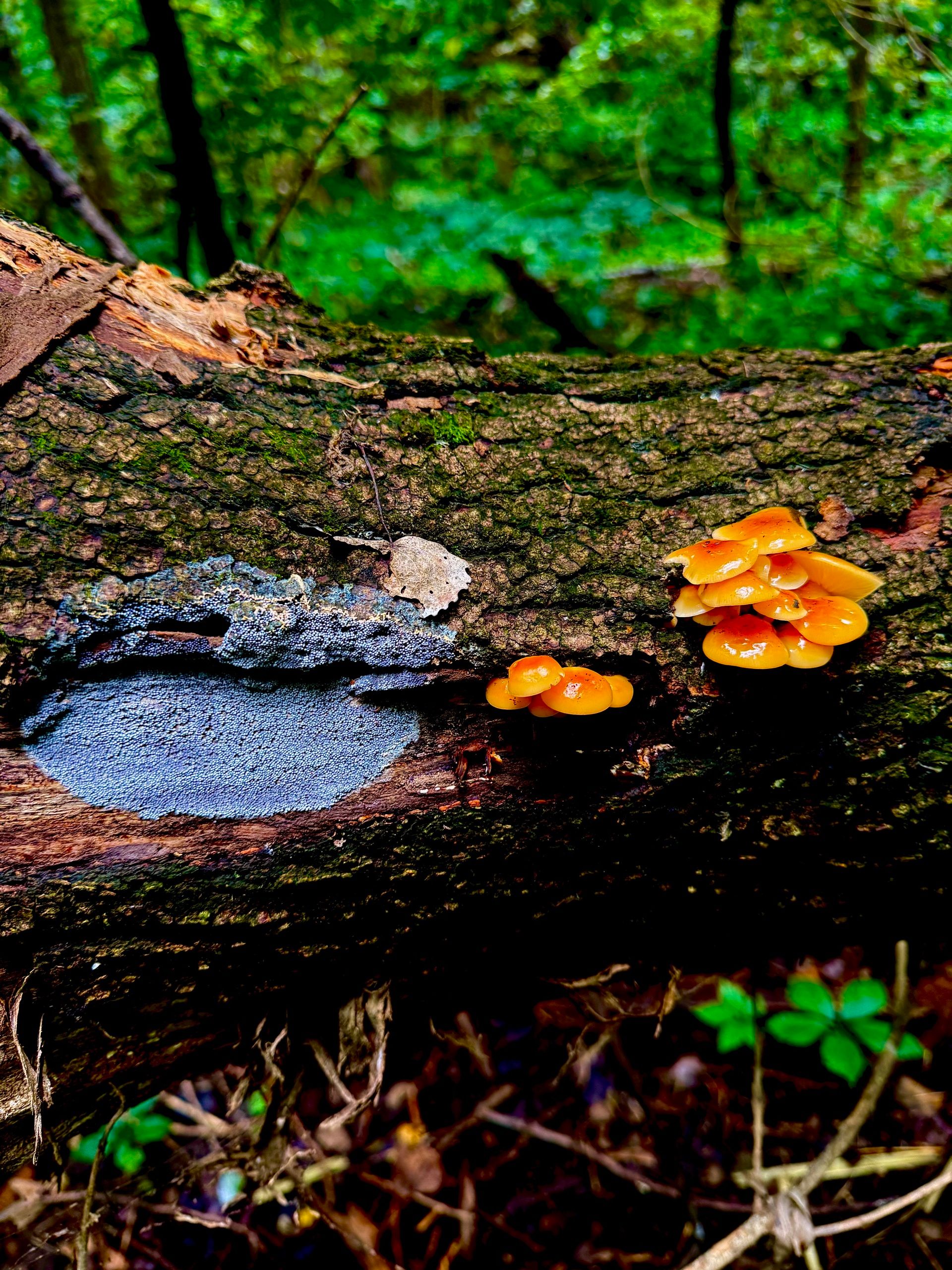
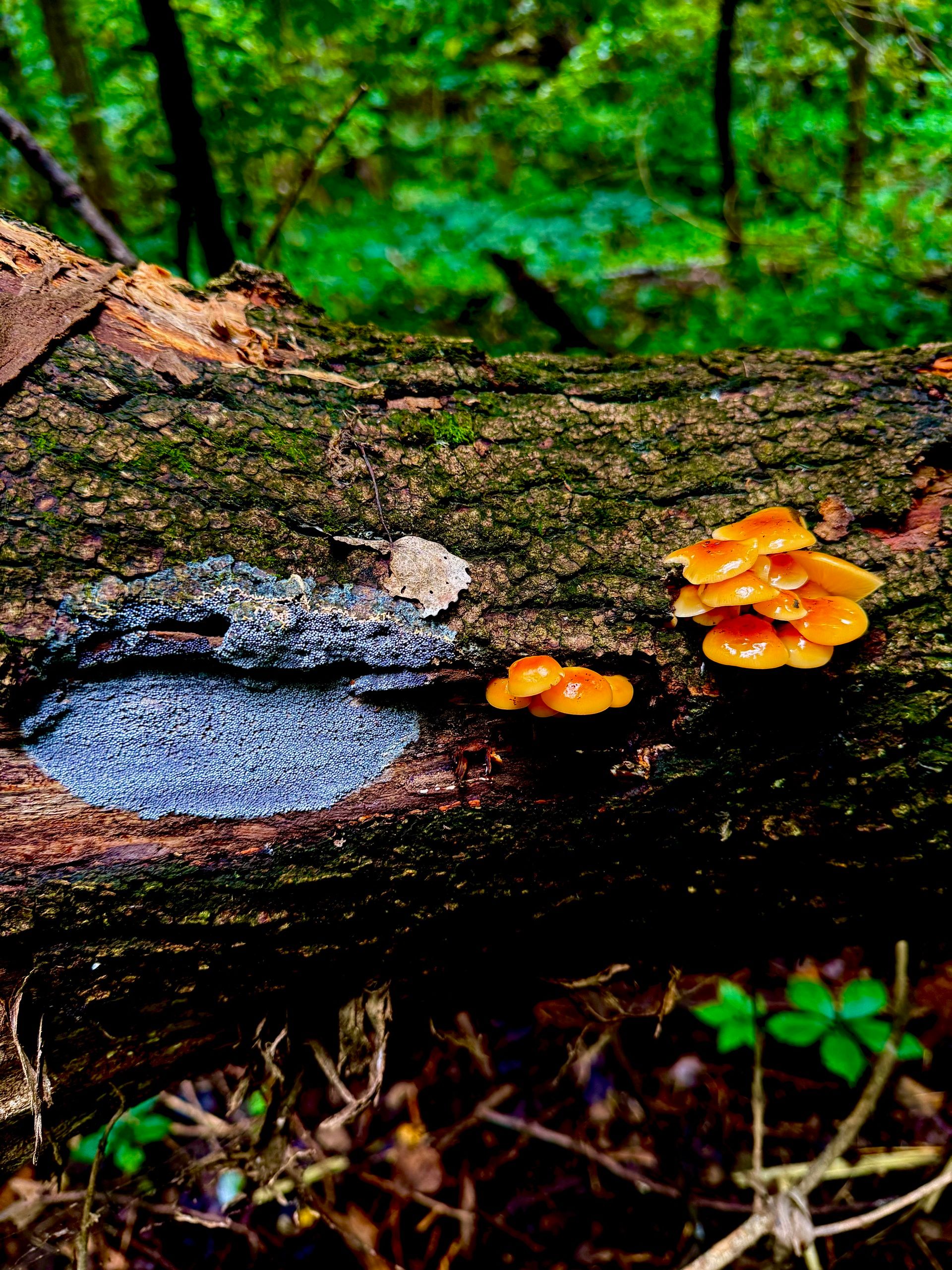
Enoki mushrooms I found near the Mississippi River, Photo Eiko Mizushima
I wanted to share these enoki mushrooms with you, aka enokitake. I ate them for the first time! Finally, after becoming a nervous wreck and twice tossing them in years previous, I’ve learned them well enough to forage and eat them. If you don’t identify them immediately after harvest, they wilt and become unrecognizable in critical ways, that was my main mistake previously. Waiting overnight won’t do for these since they need to have all their qualities shine through to discern them from their deadly look alike, the Deadly Galerina (Galerina autumnalis).
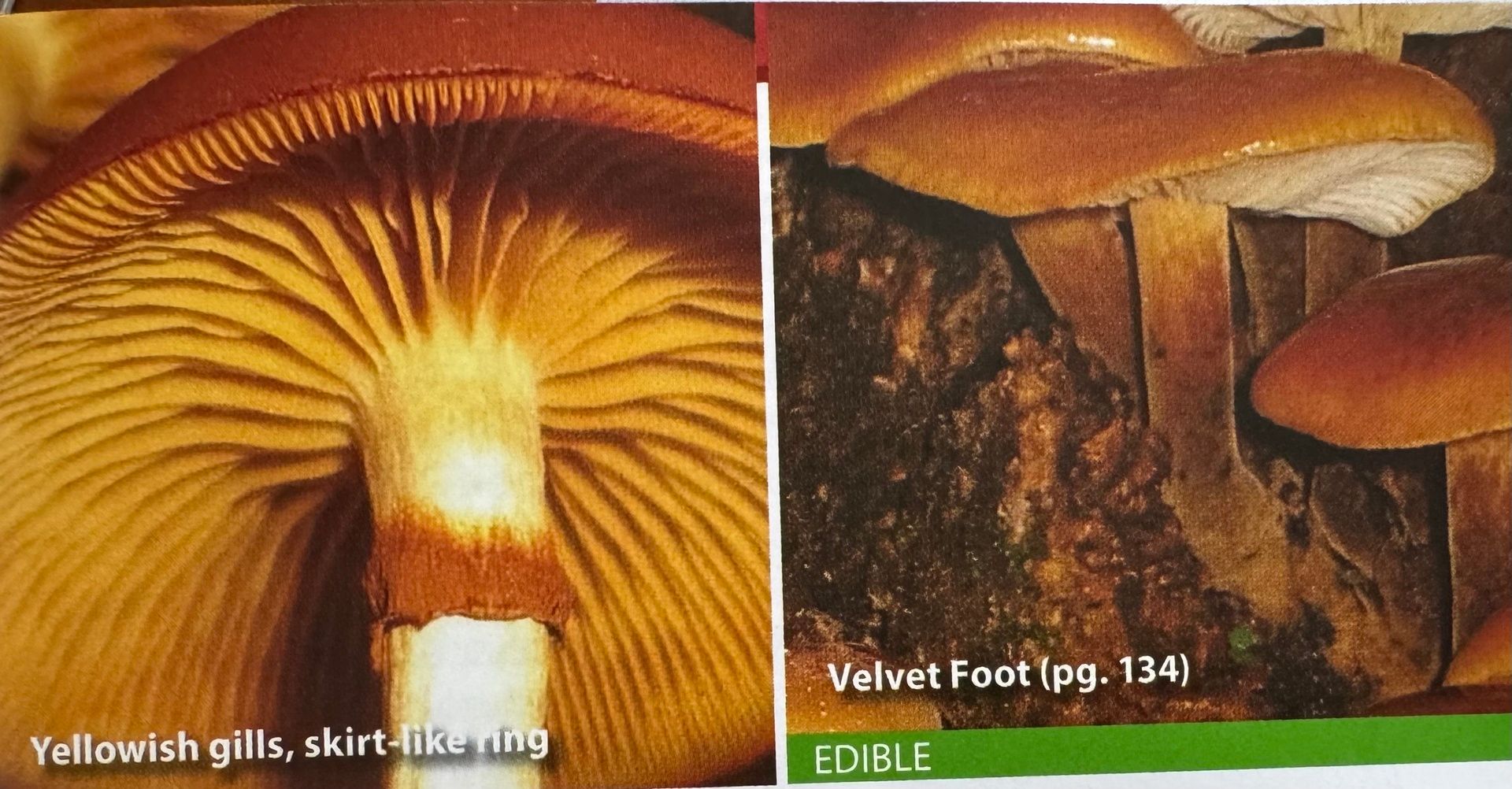
Deadly Galerina (Left) Enoki (Right)
Deadly Galerina are quite common, cooking them does not destroy their poison, and just a few will do a lot of damage. Enoki’s most important and clear defining quality that sets them apart are their white spore print, compared to the rusty brown spore print of Deadly Galerina. I suggest waiting to identify these later on in your mycological career since the risks exceed the rewards (these are very diminutive mushrooms). That is precisely why there are not many deaths from Deadly Galerina, they are so petite and you can buy enoki in the grocery store.
Identification of enoki
White spore print
Slimy cap when wet, like very slimy
Velvety stems
Stem has no ring
White to creamy gills with brown bruises
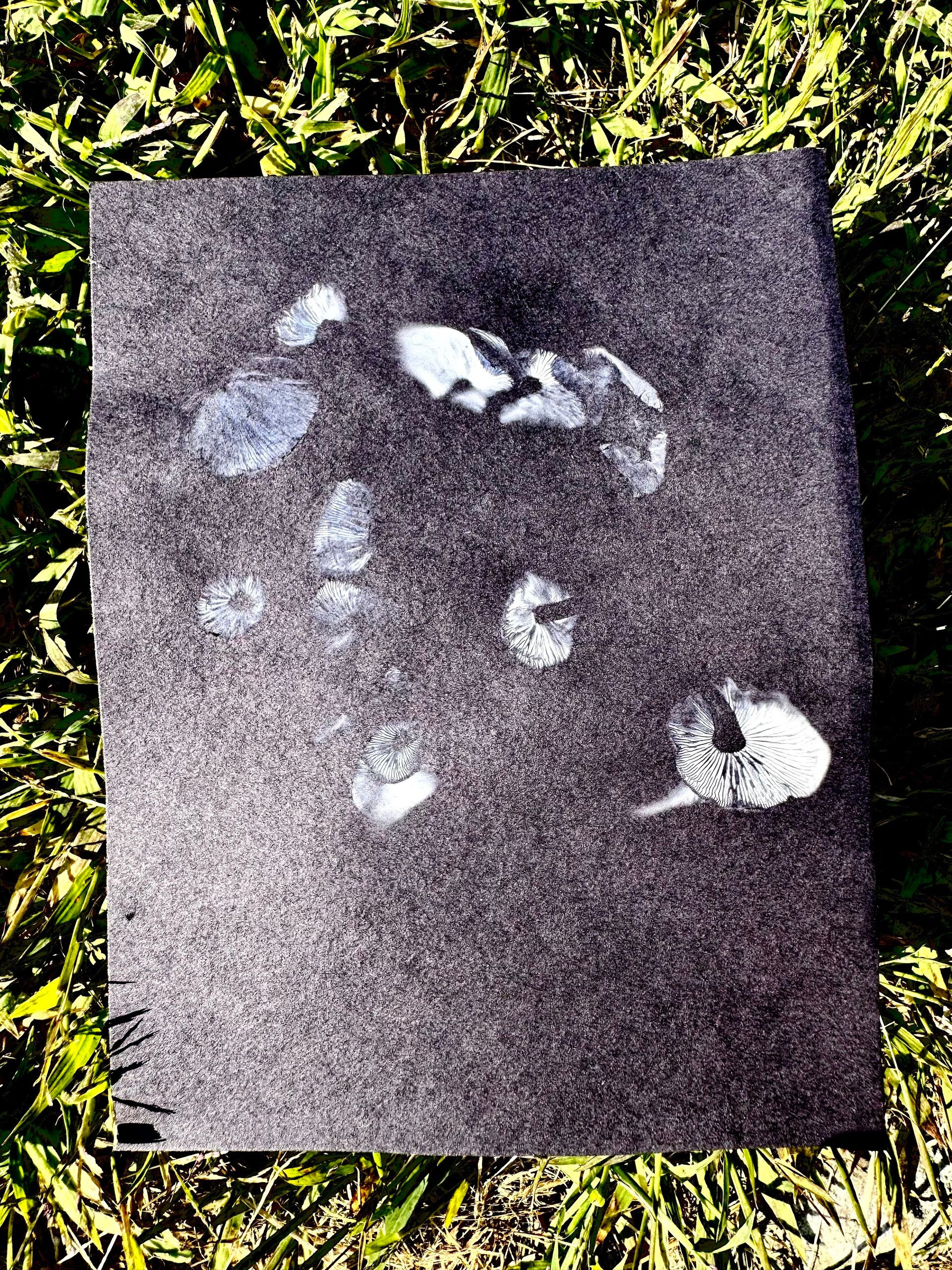
Robust spore print of Enoki I made to confirm identification. Photo by Eiko Mizushima
Identification of Deadly Galerina
Rusty brown spore print
Veil which usually forms a thin whiteish ring
Are found growing on decaying wood from conifers or deciduous trees
Yellow to pale brown gills becoming rusty brown
I’m a dedicated mushroom student, especially when it comes to learning Japanese ones as a part of connecting my heritage to this land. Store bought enoki look eerily different from wild foraged enoki. I think wild foraged enoki would be irked out to see their stretched ghostly white relatives who are grown in dark, CO2 rich environments to elongate their stems, stunt cap size, and give them a pale white appearance.

Photo of enoki by Sergii Koval
Schedule With Me

OTR/L, BA, MHP, LMT,
she/they) Integrative Therapies
I offer trauma informed somatic therapy, craniosacral therapy, Swedish massage, Thai bodywork, myofascial release, group workshops, and healing through art, play, and connecting to nature. Free 15 minute consultations can be booked on my website if you’re intrigued or have questions.
Community Events

East Lake Aikido Fundraiser, Sunday September 28th from 4:30-6:30p at 4620 44th Ave South, Minneapolis MN. RSVP by the 19th if possible.